Finding my Radical Voice is Scary
I named this “Finally, I can Talk” without processing what propping up journalistic objectivity as an ideal has cost me.

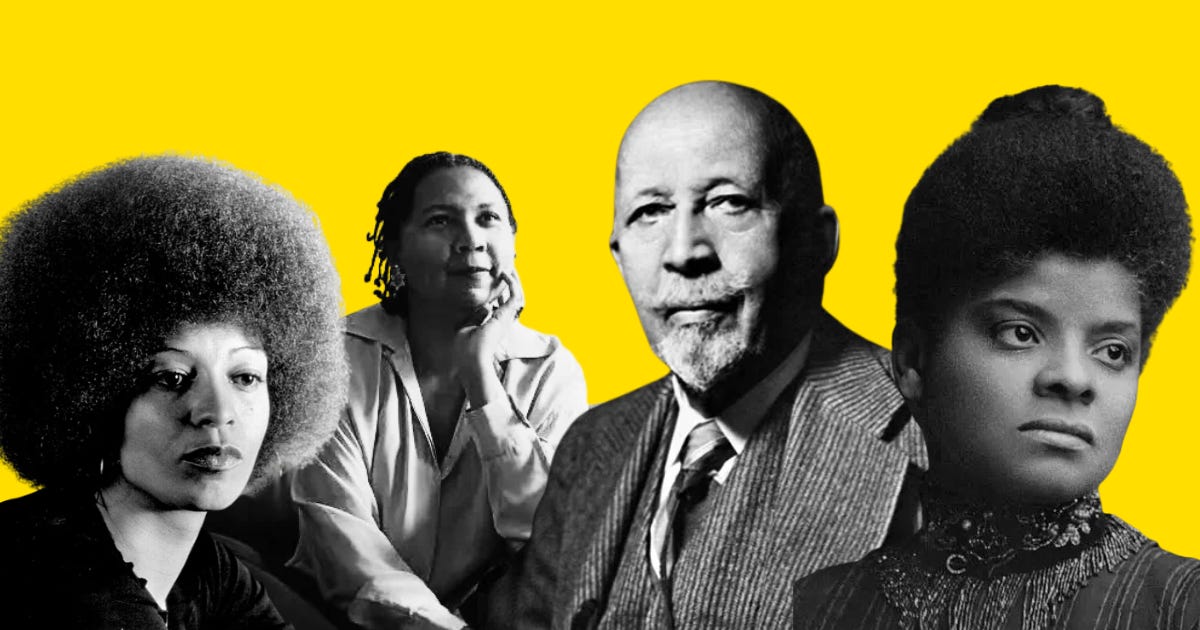
After a year away from journalism with a quick stint in public relations, I am accepting the fact that I just want to write. I want to write like bell hooks. Like W.E.B. DuBois. Like Angela Davis. Like Ida B. Wells.
Writing is art, and I haven’t been able to experience it as such for years. I actually forgot that I love writing until I got the opportunity to push my pen away from the restrictions of the code of conducts and the implied journalistic standards I pledged my life to when I accepted my calling as a reporter. But every time I come to this Substack to share my thoughts, or I go to my microphone to talk it out, I get stuck.
When I think of the people whose legacy I want mine to be similar to, like the aforementioned revolutionary activists and authors I named in the intro, I’m convinced I am in over my head when I start typing. Those people had permission to be great. They were undeniably great. I can think of a million reasons why I am not great — or as great as them.
What I have realized is that I am healing. When I giddily decided in my single digits that I wanted to be a journalist, I thought I would be the revolutionary kind. I thought I would do the work of Ida B. Wells. My desire to write for Black communities was supposed to be commendable and wanted. Turns out, that’s not what the vast majority of this industry wants. Instead, I learned that if I wanted to survive in these newsrooms my professors and mentors told me I should aspire to be in, I would have to force my voice into the rigid lines of traditional, “objective,” “fact-based” journalism. It was a rude awakening when I realized corporate journalism had no desire for my personal mission toward liberation.
When I came into journalism, I was developing a radical voice that I wanted to lend to revolutionary change. I would march into deans’ offices with demands to end racial terror on my college campus. I led protests, mobilized Black students to desire better, and I battled white people who dared to debate my humanity as a Black woman.
When I entered the field, I didn’t know I would begin an almost decade-long process of stripping my voice to match newsroom standards. It was demeaning, hurtful, and damn near a humiliation ritual. Shaping my words to match the liberal narratives of political incrementalism and the farce neutrality of whiteness as a default effectively silenced me. But that’s what it looks like to fall in line.
By the time I left The Associated Press in 2025, I wanted my voice back. I thought all I needed to do to get it back was to get out of journalism for good. But now that the floor is mine and I am largely free of restrictions, I am deathly afraid of telling anyone what I think, and I’m fearful of the potential consequences that can come.
The restriction of objectivity is my instinct. It was also easy to hide behind in my worst moments in the field. Rigid newsroom standards taught me to fear my voice, and I am sad to say that it worked.
I am wholly afraid to share my unfiltered thoughts because I was trained up in this world of hard news, straight down the line journalism where your personal opinion is a detriment to the story and your reputation. While yes, I share my opinions on Tik Tok and Twitter, I get scared every time anyone actually sees it. I force myself to let it happen because I am largely in agreement with the people in my life who say that more people need to hear my voice.
In some ways, I am grieving the voice I got to know in college. That voice was loud, fearless, and I never thought about the consequences of my actions because I spoke with the intention of liberating my people. But I think it’s similar to the healing process that came after my mother passed. When she died, I had to accept that I would never be the same, and that life wouldn’t be the same as it was before she left. I think the same thing is true for my journey to find my radical voice — it won’t have the same cadence as the one I found in college.
If I am being brutally honest with myself, I think I know the voice I am in search of now — my radical voice — has a lot of power, and I’m a little scared of it. Just like Marianne Williamson said: my light truly is my biggest fear.
The rigid newsroom asks you: who are you to be brilliant? Who are you to be gorgeous, talented, and fabulous?
I know my job is to face my fear and walk toward my light. I just wish someone could tell me what’s behind it.
Discussion about this post